Our New Year update
News from the field…
A Grey Wagtail was spotted in the middle of the pond on the cut stump of a reed. It’s been added it to our growing list of birds seen and heard at Tuppenny. The hedgerows are abuzz already.
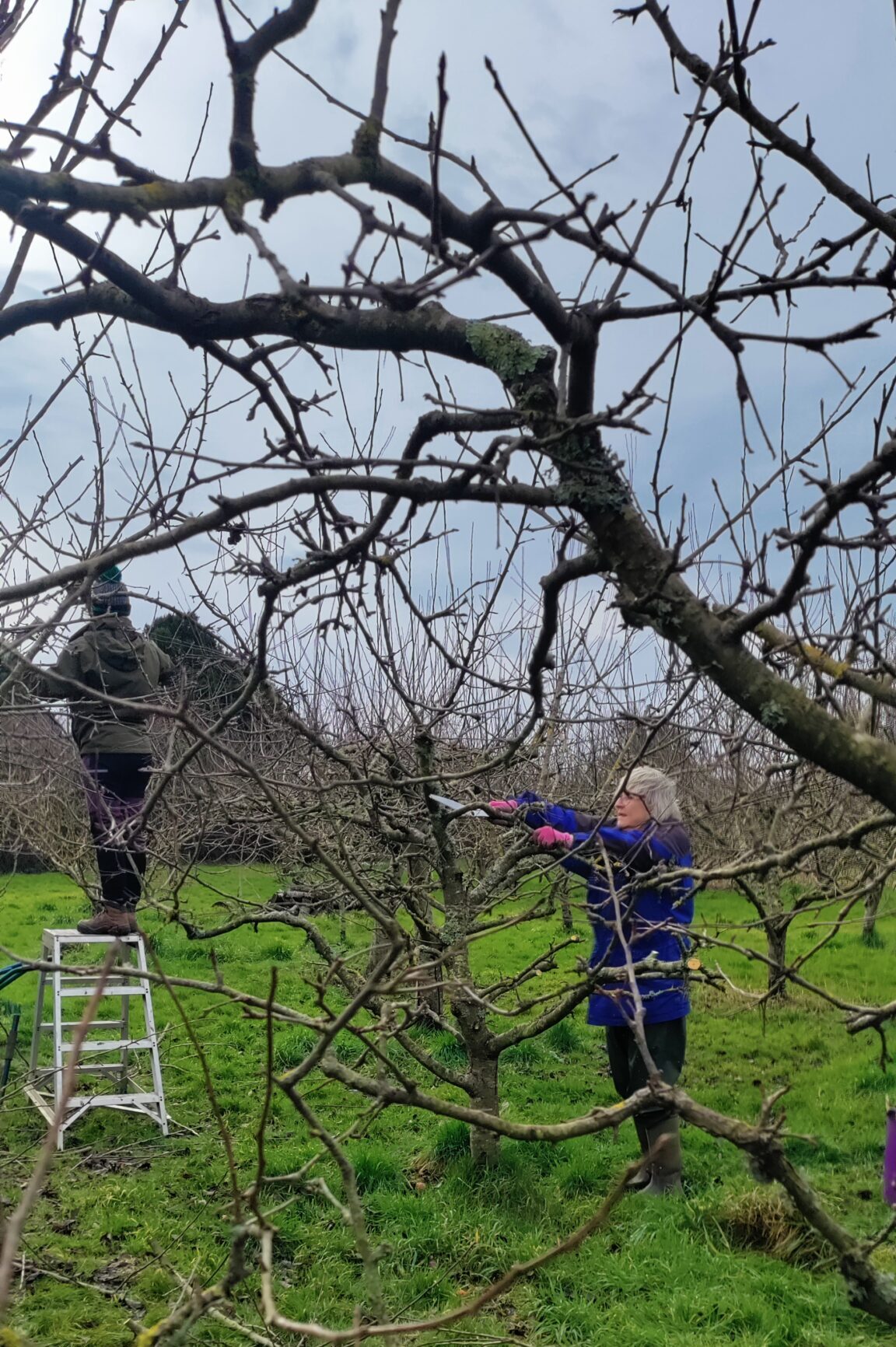
The winter apple and pear tree pruning has now been completed. We’ve found apple canker in a number of our trees, and have pruned it out where possible. On larger branches, we have cut it back to fresh green tissue to prevent it spreading any further. Sometimes, the tree will grow new bark over the top healing the wound, on others it may spread right around the bark killing the limb. Canker is a fungal disease which appears via airborne spores. One small poorly tree has been taken down because it was very badly affected but we’re expecting a good crop again this year from the orchard as long as there isn’t a late frost. We’ve almost finished the winter pruning, feeding and mulching in the fruit cage – black currants, red currants, raspberries, boysenberries, tayberries and gooseberries.
The growing season has begun with the first chillies and peppers having germinated in Head Gardener Helen’s airing cupboard at a comfy 26 degrees. It’ll shortly be in full swing. Other items already sown include tomatoes, spring onions, rocket and beetroot. Broad beans have been planted out this week, some sown direct and more coming on undercover to try to have a steadier flow of produce from the field. We’re late this year with the beans!
Plans have been made for 3 project days when we invite our gardening volunteers who are unable to commit to a regular weekly visit to join us for the day. The first is 14 March. Please let us know if you’re a gardener, fit and healthy and would like to come and help!
Social Therapeutic Horticulture
Jan and Feb are difficult months for many people and when it comes to gardening – little is growing and it’s too early for many seeds. Yet it does provide time for some tasks that are too easily shelved during the peak months of spring and summer. We have tidied our beautiful STH shed and given it a good sort out. Secateurs were cleaned and sharpened. We have been weeding and then topping up beds with compost and manure in preparation for the season ahead and we’ll soon tackle cleaning the skin of the polytunnel to enhance light levels.
The end of February has seen the Veteran flower farming course restarting. We very much look forward to starting to sow seeds and plant out sweet peas now that we’ve welcomed this newest cohort.
There are still places available on the Sow and Thrive course funded by WSCC, CDC and Hyde housing – it’s a 10 week course, starting this Monday 3rd March. It is free at the point of contact for adults that need a boost to their confidence and mental health and anyone looking to boost their gardening skills.
The Outdoor Classroom
Poppies had great fun making pizza rolls and lemon and lemon thyme muffins. We’ve also been weaving and painting with natural paints including beetroot, turmeric and clay. When the weather got wild in January, we marvelled at the hail storm and collected handfuls of perfectly spherical hail.
Felpham Community college visited with their Year 10 GCSE Food Tech pupils. They learnt about seasonality and made a wonderful range of bruschetta toppings including rocket pesto, beetroot hummus and wilted cavolo nero with white beans and garlic. Many of the students tried foods that they had never tried before and were pleasantly surprised how delicious they were!
The Education Team completed their refresher First Aid training in the beautiful surroundings of Cobnor Activity Centre. We also got together with our volunteers for a coffee, chat and working party. The area by the willow dome has had a good tidy up and is ready for use.

Tuppenny Barn are proud to be Soil Association Organic
members campaigning for healthy, humane and sustainable
food, farming and land use.

Tuppenny Barn is a member of the Organic Growers Alliance which is a network of growers, farmers and horticulturalists. The OGA is a peer-to-peer support network run by growers for growers. As well, the OGA is a place to exchange information and learn and it represents its members.